Zooseeker
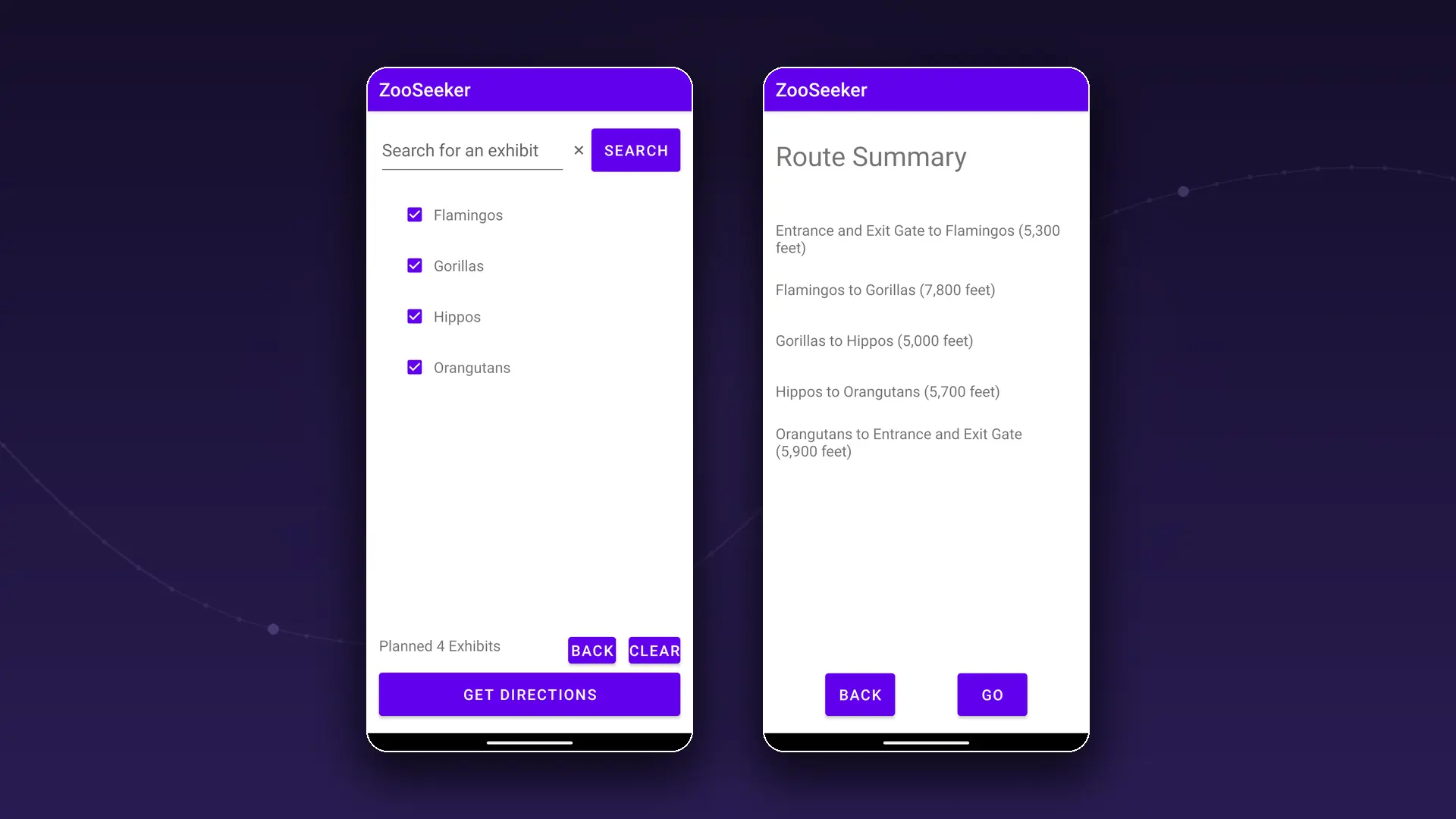
San Diego Zoo trip planner: pick the exhibits you want, get the shortest walking route between them.
Role
Android & Testing Developer
- Timeline
- March 2022
Technologies
- Java
- Android
Tools
- Git
- GitHub
- Android Studio
- JUnit
- Espresso
- Robolectric
- Zenhub
- Github Actions CI
Background
A five-person team project for CSE 110 (Software Engineering) at UCSD. Zoo visitors waste huge amounts of backtracking, and neither the official app nor a paper map plans routes. We set out to build something that plans your day: select exhibits, get an efficient path.
Solution
Pick the animals you want to see and the app computes the shortest route through all of them; adding an exhibit mid-plan recalculates automatically. I focused on pathfinding correctness and helped build the exhibit-selection interface.
Process
We scoped features as a team starting from basic navigation. I kept the code organized with standard patterns and wrote extensive tests (JUnit, Espresso, Robolectric) running on GitHub Actions CI on every change, coordinated through Zenhub. Interface decisions were driven by one question: is this readable while someone walks through the zoo holding their phone?
Final Product
Impact
A working route planner that meaningfully cuts down walking. It was also the best team-development experience I'd had to date, with real testing discipline, real CI, and real coordination.
Reflection
Team projects succeed or fail on process more than code, and this one had good process. Faster route calculation and richer exhibit details would be the next steps.